Chemistry in Everyday Environment


Project Overview
Insights into the oxygen‑transfer mechanism during human alveolar respiration inspired the product design.Fluid filter media are used to simulate red blood cells, and impurities to be filtered are regarded as oxygen atoms.
- Background -

- Research Process -
Step 1: Establishment of mathematical models

Step 2: prototype design


Step 3: Assembly and Testing


- Conclusion -
This invention targets filtration and adsorption scenarios in laboratories and daily‑life settings. Inspired by human pulmonary respiration and oxygen‑exchange mechanisms, a multi‑functional filtration device based on the bionic alveolus model is developed. Equipped with replaceable filter media, it can adsorb and filter various substances.
Experiments show that compared with conventional static filter materials, this device maintains optimal adsorption performance continuously. It improves filter‑material utilization while delivering stable filtration outcomes.
Thanks to its modular design, the device features great expandability. Further optimization will be conducted to verify its applicability across diverse fields.


Project Overview
- Background -
As the concentration of citric acid increases, more abundant pores will be constructed as more esterification is taking place.
Therefore, more TiO2 will be loaded and a higher proportion of methylene blue in the solution will be degraded and absorbed.
- Research Process -
Part 1: Chemistry Test


Positively Relative Linear Relationship
CA-TiO2-1.5 has most outstanding effect
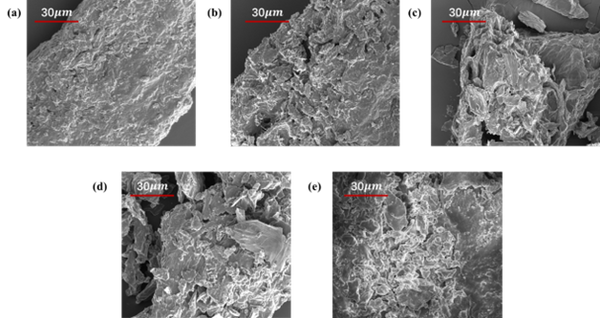
SEM Testing:
(a)unmodified banana peel
(b) CA0.5
(c) CA1.0
(d) CA1.5
(e) CA- TiO2-1.5

BET Testing:
H3-type hysteresis loop
Mesopores
With SEM, explains CA-TiO2-1.5 high absorption potential under photocatalysis
Part 2: Physical Applications
Device Design


Test:
Highest effectiveness during first 5 hours
Effect decreases with time

- Conclusion -
Results
Concentration of citric acid in banana peel modification is positively proportional to material functioning
Ca-TiO2-1.5 has the greatest effect
Ca-TiO2-1.5 can remove up to 30% of methylene blue contaminants within 5 hours under weak photocatalysis
Future Plans
Prolong the high-effectiveness time span of Ca-TiO2-1.5